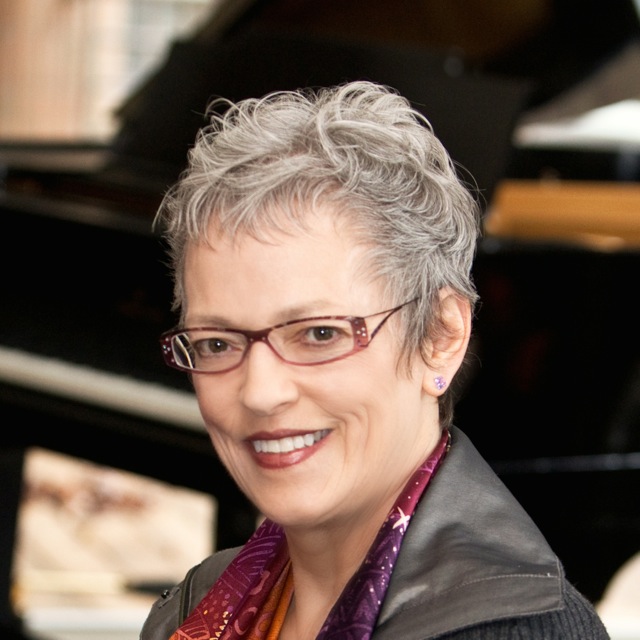
cindy mctee
TEMPUS FUGIT
for orchestra
2010
9.5 minutes
the second of two movements from Double Play
Commissioned by the Detroit Symphony Orchestra
in honor of Elaine Lebenbom.
Dedicated to the Detroit Symphony Orchestra
and its music director, Leonard Slatkin.
First performance: June 3, 2010 with the DSO under the baton of
Leonard Slatkin.
Support also provided by the Institute for Advancement of the Arts
at the University of North Texas.
Piccolo
2 Flutes
3 Oboes
Clarinet in Eb
2 Clarinets in Bb
3 Bassoons
4 Horns
3 Trumpets in C
2 Tenor Trombones
Bass Trombone
TubaTimpani
3 Percussion
StringsPercussion 1
Bongos
Conga
Guiro
Hi-hat
Snare Drum
Suspended Cymbals (large and small)
Triangle (large)
Vibraslap (mounted)
Woodblocks (2)Percussion 2
Cowbells (4)
Shaker
Sizzle Cymbal (medium)
Snare Drum
Suspended Cymbals (large and small)
Tambourine
Triangle (medium)
Woodblocks (2)Percussion 3
Bass drum
Castanets
Ratchet
Suspended Cymbal (large)
Temple Blocks (5)
Tom-toms (4)
Vibraslap (mounted)
Woodblocks (2)
using acoustic instrument samples


for information, perusal materials, sales, or rental, please visit

Tempus Fugit is the second of two movements from McTee's Double Play and was commissioned by the Detroit Symphony Orchestra in honor of Elaine Lebenbom.
Tempus Fugit, Latin for "time flees" but more commonly translated as "time flies," is frequently used as an inscription on clocks. My Tempus Fugit begins with the sounds of several pendulum clocks ticking at different speeds and takes flight about two minutes later using a rhythm borrowed from Leonard Slatkin's Fin for orchestra. Jazz rhythms and harmonies, quickly-moving repetitive melodic ideas, and fragmented form echo the multifaceted and hurried aspects of 21st-century American society.
For reviews of Cindy McTee's
AMERICAN CLASSICS NAXOS CD
featuring four orchestral works (including "Tempus Fugit"
from Double Play) performed by the
Detroit Symphony Orchestra under Leonard Slatkin,
click here.––––––––––––––––––––––––––––––––––––––
When the phrase “inside baseball” pops up in the performing arts, it usually refers to a work that assumes some additional knowledge on the part of the audience in order to be fully appreciated. The jokes in many of the Hoffnung Music Festival recordings, for example, take it for granted that the audience is pretty familiar with the standard classical repertoire.
Cindy McTee’s “Double Play”, the local premiere of which opened this weekend’s symphony concerts, probably counts as “inside baseball” in that it assumes that the listener is fairly familiar with Charles Ives’s 1906 orchestral miniature “The Unanswered Question”. That’s most obvious in the first movement (“The Unquestioned Answer”) of this 17-minute work, which is mostly an expansion on Ives’s original.
As in that original, a slow-moving theme in the strings is frequently interrupted by a “question” theme. In the Ives it’s played by a solo trumpet and never varies. In the McTee a variant of the Ives theme is first stated by the harp and vibes and then (in various transformations) by the winds and brass. A final statement of the theme on wood blocks and cowbells (Spike Jones would have loved that) leads to the lively second movement, “Tempus Fugit”.
Ms. McTee says its fast pace and jazzy harmonies “echo the multifaceted and hurried aspects of 21st-century American society,” but to me it all sounded mostly like a tribute to the “big bands” of the 1950s and 1960s, especially Woody Herman’s various Herds and Stan Kenton. Which, given that Ms. McTee apparently spent her childhood steeped in jazz, is not surprising.
“Double Play” was a great deal of fun to hear, both on Saturday night’s live broadcast with Leonard Slatkin at the podium and again on Sunday at Powell with Courtney Lewis, who replaced Mr. Slatkin for the final matinee. The musicians played brilliantly on both occasions. I hope they enjoyed presenting “Double Play” as much as my wife and I enjoyed hearing it.
Chuck Lavazzi
KDHX.ORG––––––––––––––––––––––––––––––––––––––
The contemporary piece was “Double Play,” a work for large orchestra by Slatkin’s wife, composer Cindy McTee. It had its première in Detroit in 2010, conducted by Slatkin. The first part of “Double Play” is “The Unquestioned Answer,” a takeoff on, and homage to, Charles Ives’ “The Unanswered Question,” with unresolved harmonies in the strings and winds.
Those led to the clocklike rhythms of the second part, “Tempus Fugit,” in which the tempos speed up and move into jazzy, mechanized territory. Time flies to no particular destination, but it’s a fun trip.
Sarah Bryan Miller
St. Louis Post-Dispatch––––––––––––––––––––––––––––––––––––––
Conductor Leonard Slatkin leads an intriguing program built around Beethoven's Ninth to open the Los Angeles Philharmonics summer season at the Hollywood Bowl.
In the ode, the German poet Friedrich Schiller venerates the "daughter of Elysium," and Slatkin gave women a voice by devoting the first half of the program to short works by three contemporary female composers.
Not all women composers like to be identified by gender, but this was an inspired bit of programming. Getting an audience to turn from its picnics to music on a warm evening is an ever-growing challenge these days. The female composers piqued curiosity. Their music, moreover, was intriguingly good.
The last piece was "Tempus Fugit," by Cindy McTee. The percussion section is featured. Clocks tick and they, too, are turned back to the jazzy '50s. Exuberant music that Slatkin conducted as an ode to joy, as well he might. McTee is his new bride.
Mark Swed
Los Angeles Times––––––––––––––––––––––––––––––––––––––
. . . an urban sound that is particularly intriguing. Hopefully more of McTee’s work will be offered to Miamians.
Jeff Haller
ConcertoNet.com––––––––––––––––––––––––––––––––––––––
McTee’s ‘Double Play’ stands out in NOI concert led by Slatkin.
The second piece was a local premiere of “Double Play” by Slatkin’s new bride, Cindy McTee. It was worth the drive. McTee studied with the Polish master Krzysztof Penderecki, and lived in his home for a year. Her music, while unmistakably American-sounding, also hums with Penderecki’s craftsmanship and a catholic array of influences across several centuries. The first part is an homage to Ives, while the second is a mash-up of big-band licks a la Leonard Bernstein and scurrying, frenetic urban passages. Great fun, and well delivered by all.
Robert Battery
The Washington Post––––––––––––––––––––––––––––––––––––––
McTee packed the piece full of gorgeous textures, like in the opening section, “The Unquestioned Answer,” where percussion dappled the sweet, quiet chords in the strings and winds like stars reflected in the lapping tides, pulsing with quiet energy. The “Tempus Fugit” second section, tinged with jazzy harmonies; skittered and wheeled about with great nervous energy that often expressed itself in dueling rhythms. Even though McTee says the two sections can be performed separately, my favorite thing in the whole piece was the transition, with the percussion striking a rhythm against indifferent strings, like a match trying to ignite. Slatkin kept it all humming along. . . . the work was . . . a ton of fun.
Andrew Lindemann
DMV Classical––––––––––––––––––––––––––––––––––––––
The Detroit Symphony Orchestra's season finale Thursday night felt more like a season opener -- a party, a weekend celebration festooned with glittering masterworks displayed in heady performances. Indeed, there was something to celebrate: the conclusion of conductor Leonard Slatkin's very successful first full year as the DSO's music director. And Slatkin was on the podium, presiding over a generous and splendid mix of music old and new.
The new came first, in the world premiere of Cindy McTee's "Double Play," an ambitious, imaginative and altogether irresistible essay for large orchestra in two movements of head-turning brilliance. "Double Play" brought this year's DSO Elaine Lebenbom Prize to McTee, who teaches at the University of North Texas.
The work's opening movement, an homage to Charles Ives' "The Unanswered Question," is called the "Unquestioned Answer," and it unfolds in sparkling harmonies and delicately layered textures reminiscent of Ives' 1906 composition. The second part of McTee's "Double Play," called "Tempus Fugit" (or Time Flies), takes a distinctly urban turn with its bluesy harmonies, tumbling syncopated rhythms and brisk tempos.
The two movements are linked by a rhythmically intricate rapping on wood blocks evocative of a cluster of clocks, each ticking to its own beat -- much like the opening scene in the film "Back to the Future."
But what makes McTee's work so compelling is the sheer magic of her orchestral writing. The orchestra is her canvas and she paints on it with the confidence of a master colorist. "Double Play" runs a deceptively brief 15 minutes, a quarter hour jam-packed with energy, musical invention and pure auditory delight.
Lawrence B. Johnson
The Detroit News––––––––––––––––––––––––––––––––––––––
Cindy McTee's "The Unquestioned Answer," the first movement of her crafty diptych, "Double Play," begins with a soft, portentous swoosh of percussion, a primordial orchestral swell and a rising melodic gesture by vibes and harp that reaches for the stars along the leaping intervals of a major 7th and a minor 13th.
The music, wound in existential mystery, unfolds in overlapping layers: Meandering string chords crawl in the basement. Brief bursts of astringent reeds and brass shoot through the texture and a series of solos -- flute, clarinet, violin, bassoon and more -- keep posing more questions. Or maybe the same question asked many ways.
Led by music director Leonard Slatkin, the Detroit Symphony Orchestra gave the world premiere of "Double Play" on Thursday as part of the final subscription week of the season. McTee, 57, is the winner of the DSO's third annual Elaine Lebenbom Memorial Award for women composers.
The eclectic program gleefully hopped through the centuries, opening with McTee, retreating to the height of 19th-Century romanticism with Liszt's Piano Concerto No. 1 and teenage soloist Peng Peng, dropping back another 70 years to Mozart's "Haffner Symphony" and, finally, boomeranging to the 20th Century and Stravinsky's "Firebird Suite." Diversity is good, but stylistic whiplash made for some unsettling transitions, especially as McTee's sleek contemporary language gave way to Lisztian bravura.
Still, Slatkin and the DSO dove into all of the music with gusto and the 17-minute "Double Play" is one of the strongest new works that the conductor has introduced in Detroit. Insiders will pick up on her wink at Charles Ives' 100-year-old masterpiece, "The Unanswered Question." McTee riffs on Ives' collage aesthetic, his philosophical musing and recurring solo trumpet, whose probing melody McTee remolds and hands to a gaggle of soloists.
Despite the homage, the music maintains its own tension and pacing; its polished voice is spiced with just enough harmonic tannin to leave a bite in the finish. The second movement, "Tempus Fugit" ("Time Flies") opens with wood blocks in a syncopated-clock symphony that drags on too long, before exploding into a jazzy sprint of stuttering brass chords, off-beat accents and wildly undulating bass lines.
Rhythm is king here, and I was occasionally reminded of the eccentric mid-century composer Raymond Scott, whose whimsical, mechanized sound world is most familiar through Carl Stalling's Warner Bros. cartoon scores. Slatkin led a vital, rhythmically secure performance, capturing the heady vibe of the opening movement and the exciting snap of "Tempus Fugit." The soloists all distinguished themselves.
Mark Stryker
Detroit Free Press––––––––––––––––––––––––––––––––––––––
The program began with something really fresh. [Tempus Fugit] starts with overlapping tick-tocks on wooden blocks and takes off from there, revving its engine for 10 lively minutes. It got a warm reception from the audience.
Harvey Steiman
The Aspen Times––––––––––––––––––––––––––––––––––––––
The two-movement “Double Play” amounts to a brilliantly orchestrated exercise. Part 1, “The Unquestioned Answer,” was inspired by Charles Ives’ “The Unanswered Question,” a tradition-shattering musical essay of restrained dissonances and surreal sound patterns that still commands attention and even startles listeners a century after it was written. McTee’s tension-inducing rejoinder develops out of overlapping layers of sound, mysterious in effect, existential in suggestion just as is the Ives. There are moments of near silence, demanding solo passages, and hair-raising orchestral swells, all merging into an amalgam of portent.
Rhythmically intricate tapping of wood blocks, evocative of clocks beating to different, erratic and individual times, links “The Unquestioned Answer” to part 2, “Tempus Fugit” (“Time Flees”), a colorful, inventive adventure in subtle jazz rhythms that gains speed and force as it moves toward an exhilarating conclusion. Slatkin and company played the piece with whiplash precision and magnetic vitality. Composer McTee was present to share in the cheers-suffused ovation.
Peter Jacobi
The Herald-Times (Bloomington, IN)––––––––––––––––––––––––––––––––––––––
. . . The Unquestioned Answer . . . tone ebbing and flowing with alluring color and a welcome freedom from nervous haste.
Bernard Jacobson
MusicWeb International––––––––––––––––––––––––––––––––––––––
A third work was performed, in its Seattle premiere — Cindy McTee’s “Double Play.” Born in Tacoma and educated at Pacific Lutheran University as well as Yale University and University of Iowa, McTee will not be upsetting any apple carts with this piece, composed in two sections but played as one Thursday. It was premiered last year by the Detroit Symphony of which Leonard Slatkin, SSO guest conductor for the night, is the music director. The work is tonally appealing, well-crafted and oiled, making no attempt to be in fashion musically but also making no attempt to go backward in time and spirit. She has plenty of ideas which she has assembled into a coherent whole.
R. M. Campbell
The Gathering Note––––––––––––––––––––––––––––––––––––––
Meanwhile, Saturday night downstairs in the big hall we also heard some pretty exciting noises. Leonard Slatkin conducted a program that began well with a new piece, Cindy McTee's 'Double Play,' which was premiered last June in Detroit, also under Slatkin's baton. The composer managed the huge orchestra with exciting imagination and skill. An amazing palette of delicious sounds unfolded, while an expanded percussion section peppered it all with a lot of fun. The composer took a well-deserved bow.
Rod Parke
Seattle Gay News––––––––––––––––––––––––––––––––––––––
But under this radar of the obvious flies a wonderful surprise, in the form of a newish work by Northwest-born composer Cindy McTee. "Double Play" for Orchestra, premiered less than a year ago by Slatkin in Detroit, is an absolutely crackerjack piece, one of those rare works that is immediately accessible without saccharine. The first hearing is deeply satisfying, with enough substance and delight to invite repeated listening.
The first movement, "The Unquestioned Answer," plays with the themes of Charles Ives' "The Unanswered Question," with fascinating textures from the percussion section and an air of mystery from the harmonic bed of strings. The second movement, "Tempus Fugit," has enough drive and energy to give the "Peter Gunn" theme a run for its money. As the Latin title suggests, time flies, as do violin bows. The composer was at the concert on Thursday night, and she must have been pleased with both the performance and the enthusiastic response.John Sutherland
The Seattle Times